
Pick-Ups in Agriculture play a vital role in modern farming operations. The modern agricultural industry is part of an evolving landscape that benefits from the operation of pick-up vehicles
The modern agricultural industry is part of an evolving landscape that benefits from the operation of Pick-Up Vehicles.
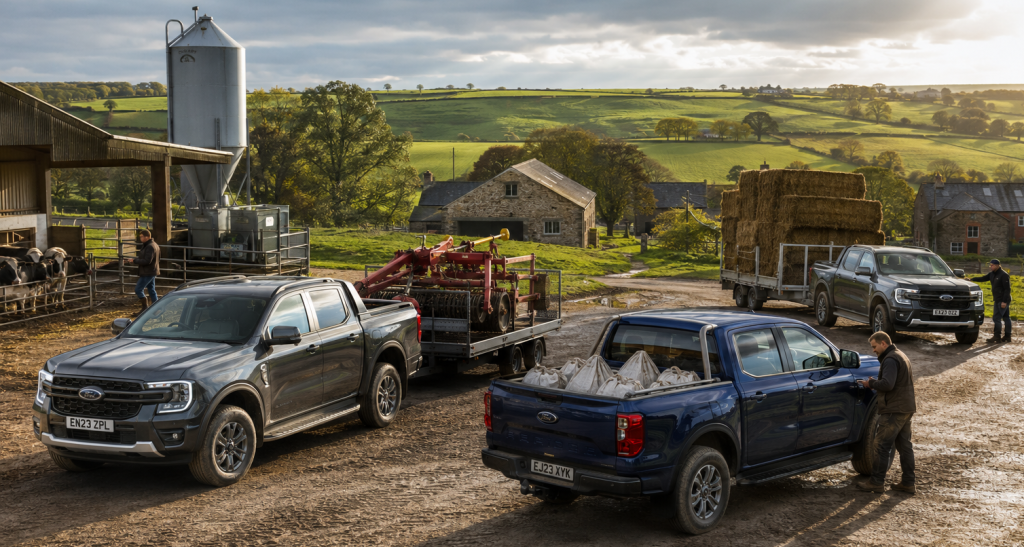
Efficiency is a key drive to ensuring productivity and profitability. One of the motor vehicle heroes in the agricultural sector is the pick-up truck, a versatile workhorse that plays a crucial role in farm operations. Performing a multi-role function, pick-ups in agricultural businesses are true work horses.
Livestock Management:
For farmers involved in livestock management, pick-up trucks are vital for transporting animals, feed, and equipment. The rear cargo area can be modified to accommodate towing livestock trailers, making the transportation of cattle, poultry, or other animals efficient and stress-free. Additionally, pick-ups are frequently used to deliver feed and supplies to different areas of the farm.
Transportation of Produce and Supplies:
Pick-up trucks can be indispensable for the transportation of agricultural produce from the fields to markets or storage facilities. Whether it’s freshly harvested fruits and vegetables or bulkier items like hay or grains, pick-ups provide the necessary cargo space, towing capacity and capability to handle a variety of terrains and weather conditions.
Fieldwork and Crop Maintenance:
Agriculture involves a myriad of tasks related to fieldwork and crop maintenance. Pick-up trucks are often equipped with off-road capabilities, allowing farmers to navigate through uneven terrains to inspect crops, apply fertilisers, and manage irrigation systems. The mobility and versatility of pick-ups make them an essential tool for farmers engaged in day-to-day operations across vast agricultural landscapes.
Equipment Hauling:
Agricultural activities often require specialised equipment, such as Plows, Cultivators, and harvesting machinery. Pick-up trucks, with their towing capabilities, play a pivotal role in hauling these implements between fields or from storage to the working site. This flexibility is instrumental in optimising the use of machinery across the farm.
Emergency Response and Maintenance:
Farming is a dynamic industry where unforeseen circumstances, such as equipment breakdowns or sudden changes in weather conditions, can occur. Pick-up trucks equipped with toolboxes and emergency kits serve as mobile workshops, enabling agricultural workers to respond quickly to on-site issues and conduct routine maintenance tasks without the additional need for a dedicated maintenance facility.

While pick-up trucks are commonly owned by agricultural operators, there are instances where short-term vehicle rentals can offer significant advantages. Not least the flexibility to add transport capacity to demand.
Seasonal Demands:
Agriculture is inherently seasonal, with varying demands throughout the year. Short-term vehicle rentals allow the flexibility to increase an existing fleet during peak seasons without committing to the long-term costs associated with purchasing additional vehicles or the worry of vehicle depreciation. Whether it’s the harvest season or planting time, having access to extra pick-up trucks can alleviate the strain on existing resources.


Cost Efficiency:
Purchasing and maintaining a large fleet of vehicles can be a significant financial burden for farmers, especially for small or medium-sized operations. Short-term vehicle rentals provide a cost-effective solution by allowing farmers to pay only for the vehicles they need when they need them. This not only reduces upfront costs but also minimises ongoing maintenance and insurance expenses.
Flexibility and Adaptability:
Agricultural operations are dynamic and subject to change due to weather conditions, market fluctuations, or unforeseen challenges. Short-term vehicle rentals offer the flexibility to adapt and respond quickly to changing environments and operational needs. Whether it’s scaling up during busy seasons or scaling down during quieter periods, the ability to adjust the number of vehicles based on current needs is a valuable asset.

Reduced Downtime:
Vehicle maintenance and repairs can result in downtime for a farming operation, affecting productivity. Short-term vehicle rentals can help mitigate downtime by providing immediate replacements in the event of breakdowns or scheduled maintenance of owned vehicles. This ensures that farm activities continue seamlessly, minimizing disruptions and maximising efficiency.
In the realm of modern agriculture, pick-up trucks stand out as indispensable assets, contributing to the success of farm operations in numerous ways. Their versatility, mobility, and adaptability make them an essential tool for farmers engaged in a wide range of tasks, from transportation and fieldwork to livestock management and emergency response.
Recognising the seasonal and dynamic nature of agriculture, short-term vehicle rentals emerge as a strategic solution for optimising the use of pick-up trucks. Through offering flexibility and cost efficiency, short-term rentals offer agricultural businesses agility and resourcefulness to respond to their operational challenges.
📞 01782 444 289
📩 info@cvmworld.co.uk
🌐 www.minibus-online.co.uk
The New Ford Ranger Plug-In Hybrid Pickup is finally here in 2026. It’s changing the game for the pickup market offering power, efficiency, and lower emissions, all in one vehicle. Whether you’re upgrading your fleet or need a versatile vehicle for your business, CVM World is offering the Ford Ranger PHEV for business lease, along with an Extreme modified model available for sale.
Combining a powerful 2.3-litre EcoBoost Petrol engine with a 75 kW battery-powered motor, the Ford Ranger Plug-In Hybrid offers:
Impressive all-electric range (ideal for city driving and short trips) – up to 26 Miles
Serious towing capacity for work or adventure – up to 3.5 Tonne
Powerful petrol engine benefiting from 281ps compared to 205ps that a 2.0L Diesel puts out – as well as enjoying 697nm of torque compared to 500nm the 2.0 Diesel allows.
Offroad capability offering 7 different driving modes compared to the standard 6 modes that the 2.0L Diesel has access to.
Massive Payload helping with heaving loading – up to 1,046kg, which is more than the standard Diesel Ford Ranger
Lower running costs thanks to better fuel efficiency and potential tax benefits
Significant savings can be made when charging, particularly to a low electricity tariff – Up to £1,030 a year (vs 2.0L Diesel, assuming 50 miles/day and 7p/kWh EV tariff), or up to £300 a year on a standard tariff (27.5p/kWh) *
Benefit from lower Service, Maintenance & Repair (SMR) costs, due to the lack of need for AdBlue or Diesel Particle Filters (DPFs). An estimated £2,452 saving to SMR can be made running Ranger PHEV *
Enjoy lower Benefit in Kind (BIK) rates thanks to Ranger PHEV’s low CO2 emissions of 68g/km. For example, a 20% tax payer has a Monthly BIK Rate of £174, compared to £306 for Ranger 2.0 Diesel.
At CVM World, we make it easy for businesses to access the latest vehicles. Whether you’re looking to buy outright or arrange a business lease, we offer competitive pricing, fully maintained contracts, expert advice and nationwide delivery.
Ready to go hybrid? The New Ford Ranger Plug-In Hybrid Pickup is the perfect solution—and it’s available now at CVM World.
* May not reflect your actual fuel costs, may vary depending on driving habits, type of fuel and road conditions. Baseline Assumption – Diesel £1.461/l, Petrol £1.387/l, Electricity £0.275/kWh. Based on daily mileage driven 6 days per week/42 weeks a year. All prices and tax rates are subject to change.
** Distance-based study. Routine service interval of 2yr/20k km for PHEV. SMR costs in line with target = Competitive. SMR costs based on 3 year/150k km (93k mi) ownership period.